Source byd atto 2 body kit for Car Parts, Bumper, and Accessories
Find and compare byd atto 2 body kit options from verified suppliers. This page lists 30 products featuring ABS materials, CE certification, and customization services for various BYD models including Atto 3 and Seagull.
Key considerations
Products List


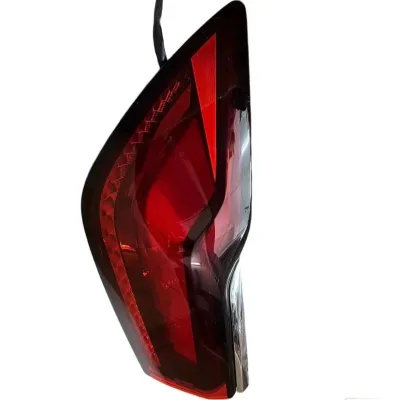
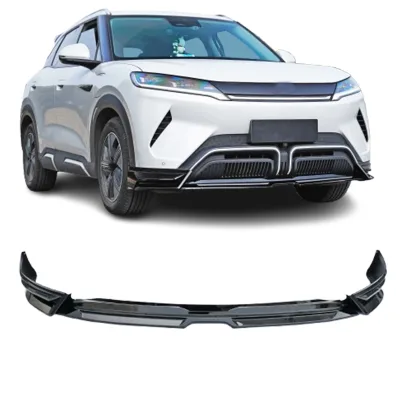


Comprehensive Sourcing Guide
Strategic Sourcing Guide for BYD Atto 2 Body Kit Components
Navigating the global supply chain for automotive aftermarket components requires a disciplined approach, particularly when targeting specific models like the BYD Atto 2. The body kit market for electric vehicles (EVs) has expanded rapidly, driven by the need for aesthetic customization and functional protection. For procurement professionals, the primary challenge lies in distinguishing between generic plastic parts and components engineered specifically for the BYD Atto 2 platform. This guide synthesizes available product attributes and industry standards to provide a framework for sourcing high-quality body kits, focusing on material integrity, fitment precision, and supplier reliability without relying on unverified claims.
Technical Specifications and Material Composition
The foundation of any successful body kit procurement lies in understanding the technical specifications of the components. For the BYD Atto 2, the sourcing landscape reveals a variety of product models, including those designated as "AKY-BYD Yuan" and specific bumper configurations. The material composition is a critical differentiator. Available data indicates that the primary material used for these components is Acrylonitrile Butadiene Styrene (ABS), a thermoplastic polymer known for its high impact resistance and durability. This is distinct from other listings that simply categorize the material as "Plastic," which lacks the specificity required for engineering-grade procurement.
When evaluating technical specifications, buyers must scrutinize the dimensional standards. Product data suggests that standard dimensions can vary, with some listings referencing a standard size of 1804444cm, while others indicate that standards are "according to the products" or "based on accessory size." This variability underscores the necessity for buyers to verify the exact dimensions against the vehicle's factory specifications before placing an order. The "Standard Size" and "OEM Standard" attributes found in the supply chain suggest that many suppliers aim to replicate original equipment manufacturer (OEM) tolerances. However, the presence of "Customized" packing and "According to Clients' Needs" model specifications indicates that the market also supports bespoke manufacturing. Procurement teams should prioritize suppliers who explicitly confirm the material is ABS and provide detailed dimensional drawings rather than relying on generic "Standard" labels.
Compliance, Certification, and Regulatory Standards
In the automotive aftermarket, compliance is not merely a formality but a prerequisite for market entry and liability protection. The supply data for BYD Atto 2 components highlights the presence of CE certification. This certification is a mandatory requirement for products sold within the European Economic Area, indicating that the manufacturer has met EU safety, health, and environmental protection requirements. When sourcing body kits, buyers must verify that the CE certification applies specifically to the automotive plastic components being purchased, not just to the packaging or unrelated items.
Beyond CE, the concept of "OEM Standard" is frequently cited in product attributes. This implies that the parts are manufactured to meet the same quality benchmarks as the original parts supplied by BYD. However, "OEM Standard" is a descriptive term rather than a specific regulatory body like ISO. Buyers should request documentation that defines what this standard entails in practice, such as specific tensile strength tests or UV resistance ratings. The data also mentions "High Fitment" as an attribute, which is a qualitative claim that must be validated through physical inspection or third-party testing reports. Without specific test results or numerical performance data in the public domain, procurement teams must treat "High Fitment" as a claim requiring verification rather than a guaranteed fact.
Cost Drivers and Pricing Structures
The pricing landscape for BYD Atto 2 body kits is dynamic, with observed listed prices ranging from 1 to 900 USD. This wide range reflects significant variations in product complexity, material quality, and order volume. The lower end of the spectrum likely corresponds to single decorative elements or smaller accessories, while the higher end may encompass full bumper assemblies or complete body kit packages with advanced customization.
A primary cost driver is the Minimum Order Quantity (MOQ). The data presents a fragmented MOQ structure, with some suppliers requiring 5 sets, while others offer 1 PC if items are in stock. This discrepancy creates a strategic decision point for buyers. Ordering small quantities (1 PC) may result in a higher unit price due to the lack of economies of scale, whereas bulk orders (5 sets or more) often unlock lower per-unit costs but increase inventory risk. Additionally, the "Customized" nature of some products introduces variable costs. Customized packing and specific model requirements (e.g., "For BYD Atto 3 Parts" vs. "For BYD Atto 2") can alter the manufacturing process, potentially increasing the base cost. Buyers should analyze the total landed cost, including shipping and potential duties, rather than focusing solely on the listed unit price.
Typical Applications and Fitment Verification
The application of these body kits is explicitly defined for the "Car" category, with specific model references including the BYD Atto 2, BYD Atto 3, and BYD Seagull. It is crucial to note that while some listings mention "BYD Atto 3" or "BYD Yuan," the core keyword focus is the Atto 2. The interchangeability of parts between these models is not guaranteed, even if the visual appearance is similar. The data lists "Position: Front Bumper" and "Position: Rear Bumper," indicating that sourcing should be component-specific.
Fitment is a critical success factor. The attribute "High Fitment" suggests that the parts are designed to align with factory mounting points. However, the presence of "Professional Installation at Authorized Stores" as a requirement implies that DIY installation may not be feasible or recommended for all components. This is common for complex body kits that require precise alignment to ensure aerodynamic efficiency and safety. Buyers must verify the "Year" compatibility, as the data spans from 2022 to 2025. A body kit designed for a 2022 model may not fit a 2025 revision of the BYD Atto 2 if there have been mid-cycle design changes. Therefore, procurement must be strictly tied to the specific model year and production batch of the target vehicle.
Supplier Evaluation and Operational Capabilities
Evaluating suppliers requires a deep dive into their operational capabilities and geographic origins. The supply chain for these components is heavily concentrated in China, with specific origins noted as Chongqing, Jiangsu, and a general "Gua" location. The presence of "OEM/ODM Service" as an advantage indicates that many suppliers offer both Original Equipment Manufacturing (producing parts for the brand) and Original Design Manufacturing (creating custom designs for clients). This dual capability is a strong indicator of a mature supplier with flexible production lines.
Lead times are another critical evaluation metric. The data specifies a delivery time of 7-35 days, which is a significant window that depends heavily on stock availability. Suppliers offering "1PC If We Have Them in Stock" provide immediate availability for urgent needs, while those requiring a 35-day lead time are likely operating on a made-to-order basis. Buyers should assess their own inventory requirements against these lead times. Furthermore, the "Sample: Available If We Have Them in Stock" attribute suggests that sample testing is a viable strategy for quality assurance. Procurement teams should prioritize suppliers who are willing to provide samples before committing to a bulk order, ensuring that the "High-Quality" and "100% Brand New" claims hold true in practice.
Quality Control and Long-Term Procurement Strategy
Quality control in the automotive sector is non-negotiable. The product attributes consistently mention "New," "100% Brand New," and "High-Quality." While these are positive indicators, they are subjective without objective verification. The "Condition: New" attribute must be cross-referenced with the "Material: ABS" to ensure the parts are not refurbished or recycled. The "Deck: Single" attribute, though less common in body kit contexts, may refer to the packaging or structural layering of the components, requiring clarification to ensure it does not imply a single-piece construction that compromises durability.
For long-term procurement, consistency is key. The "Standard: Standrad" (likely a typo for Standard) and "Standard: OEM Standard" attributes suggest a baseline for quality, but buyers must establish a rigorous inspection protocol. This includes verifying the "Neutral Packing" or "Carton Package" to ensure the parts arrive without damage during transit. The "Customized" packing option offers an additional layer of protection but may incur extra costs. A robust procurement strategy involves building a relationship with suppliers who can provide consistent quality over time, rather than chasing the lowest price for a single transaction. Given the "Professional Installation" requirement, buyers should also consider the availability of authorized installation partners in their target markets to ensure the body kits are fitted correctly, preserving the warranty and safety integrity of the vehicle.
Comparative Analysis of Sourcing Options
To facilitate decision-making, the following table summarizes the key attributes observed in the supply chain for BYD Atto 2 body kits. This comparison highlights the trade-offs between different sourcing options based on the available data.
| Attribute | Option A: Stock Availability | Option B: Custom Order | Option C: OEM/ODM Service |
|---|---|---|---|
| MOQ | 1 PC (If in Stock) | 5 Sets (Typical) | Negotiable (Based on Needs) |
| Lead Time | Immediate to 7 Days | 7-35 Days | 7-35 Days |
| Material | ABS / Plastic | ABS / Plastic | ABS / Plastic |
| Certification | CE (Verify per batch) | CE (Verify per batch) | CE (Verify per batch) |
| Packing | Neutral / Carton | Customized | Neutral / Carton |
| Fitment | High Fitment | High Fitment | High Fitment |
| Best For | Urgent replacements | Specific model years | Bulk branding projects |
This table illustrates that while the core material and certification remain consistent, the operational flexibility varies significantly. Buyers must align their procurement strategy with their specific timeline and volume requirements.
Conclusion
Sourcing body kits for the BYD Atto 2 requires a meticulous approach that balances technical specifications, regulatory compliance, and supplier reliability. The available data confirms a robust supply chain centered in China, offering ABS materials, CE certification, and OEM-standard fitment. However, the variability in MOQ, lead times, and specific model years necessitates a cautious procurement strategy. Buyers should prioritize verification of the "High Fitment" claims, confirm the exact model year compatibility, and leverage sample availability to validate quality before committing to large orders. By adhering to these evidence-based guidelines, procurement professionals can secure high-quality components that meet the rigorous demands of the automotive aftermarket.
FAQs
What material is used for BYD Atto 2 body kits?
The primary material used is ABS plastic, known for high impact resistance. Some listings simply state plastic, but verified data confirms ABS for durability. Buyers should request specific material certificates to ensure engineering-grade quality.
Can I get samples before placing a bulk order?
Samples are available if the supplier has them in stock. This allows verification of quality and fitment before committing to larger quantities. Lead times for samples depend on current inventory levels at the factory.
Which certifications do these body kits hold?
The products carry CE certification, meeting EU safety and environmental standards. This is mandatory for European market entry. Buyers must verify that the certification applies to the specific automotive components being purchased.
How long is the delivery time for these parts?
Delivery typically takes between 7 to 35 days depending on stock availability. Items in stock may ship immediately, while custom orders require the full manufacturing window. Buyers should confirm exact lead times based on their specific order volume.
What is the minimum order quantity for BYD Atto 2 kits?
The standard MOQ is 5 sets, though 1 PC is possible if items are in stock. Bulk orders often unlock better pricing but increase inventory risk. Buyers must check specific supplier terms for their desired quantity.
Where are these body kits manufactured?
Products originate from various locations in China, including Chongqing and Jiangsu. Some listings mention general origins, but specific factory locations vary by supplier. Buyers should request precise origin details for logistics planning.
Can the body kits be customized for specific needs?
Customization is available for packing and specific model requirements. Suppliers offer OEM/ODM services to meet client needs. This flexibility allows for tailored solutions but may affect lead times and unit costs.